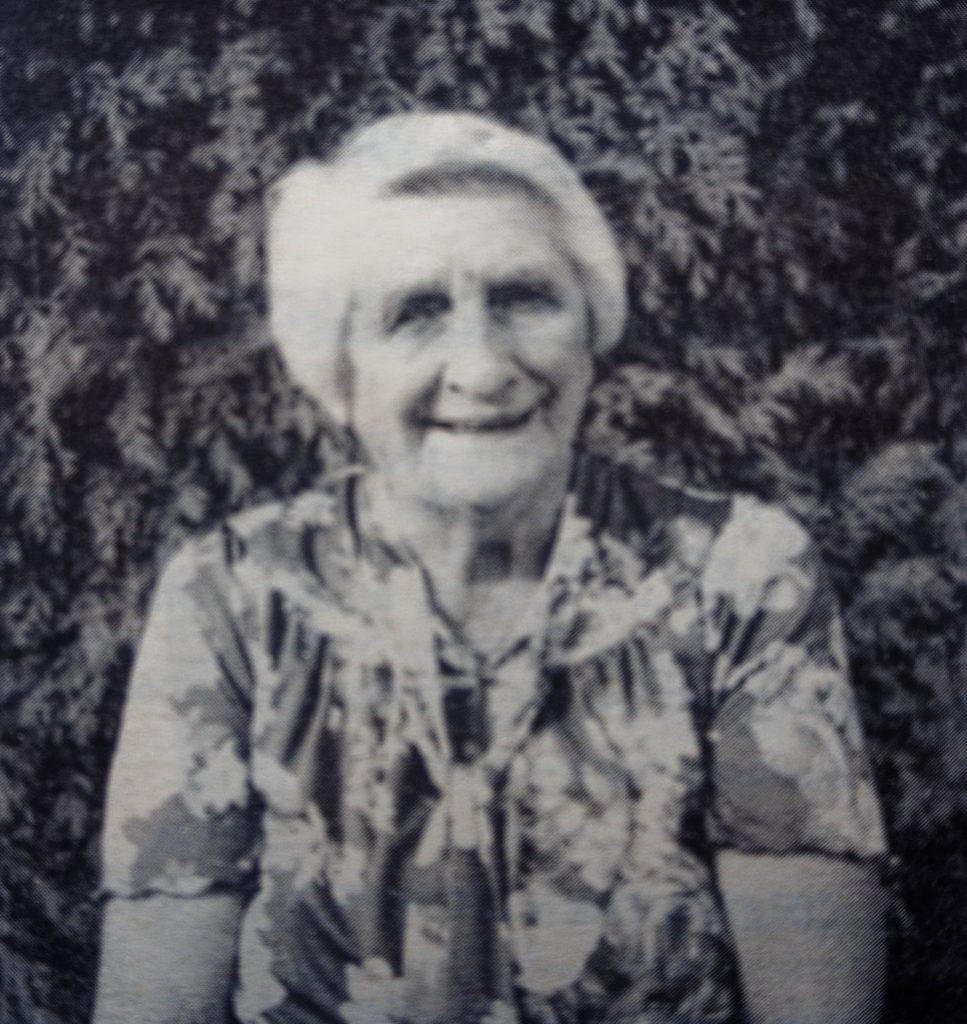
Hilda Preece was born in 1903, lived in the village all her life, attended the village school, then became a teacher and later taught at the village school.
When we arrived in 1973 she was 70 and still very much alive. The timescale with this account is therefore continuous but the two emit a very different aura.
She wrote Diary of a Shropshire Villager that is now in the Shropshire Archive which gives off a feeling of isolated calm. Villagers rarely venturing outside the mental enclosing walls of the village with Wenlock Edge being the perceived limit of existence. Laurie Lee makes the same observation in Cider with Rosie about the enclosing edge of beechwoods around Stroud.
I LOVE Wenlock Edge. I have lived in the valley below it for many years. It seemed to be the ending of the world to infant eyes. There was no thought then of what lay beyond. Hilda Preece from A Diary of a Shropshire Villager
In our time, post 1973, only glimpses of that relatively recent past are detectable, and even they are subjective. Hilda herself notes great changes in her lifetime which appear more drastic than the changes in my half a lifetime in the village. She mentions the marked dwindling of activity in and around the church, the disappearance of the village school, the last remnants of a whole band of busy tradespeople and the closure of both village shops. Not mentioned are the transformation in personal transport in buses and cars, along with a revolution in communications especially TV.
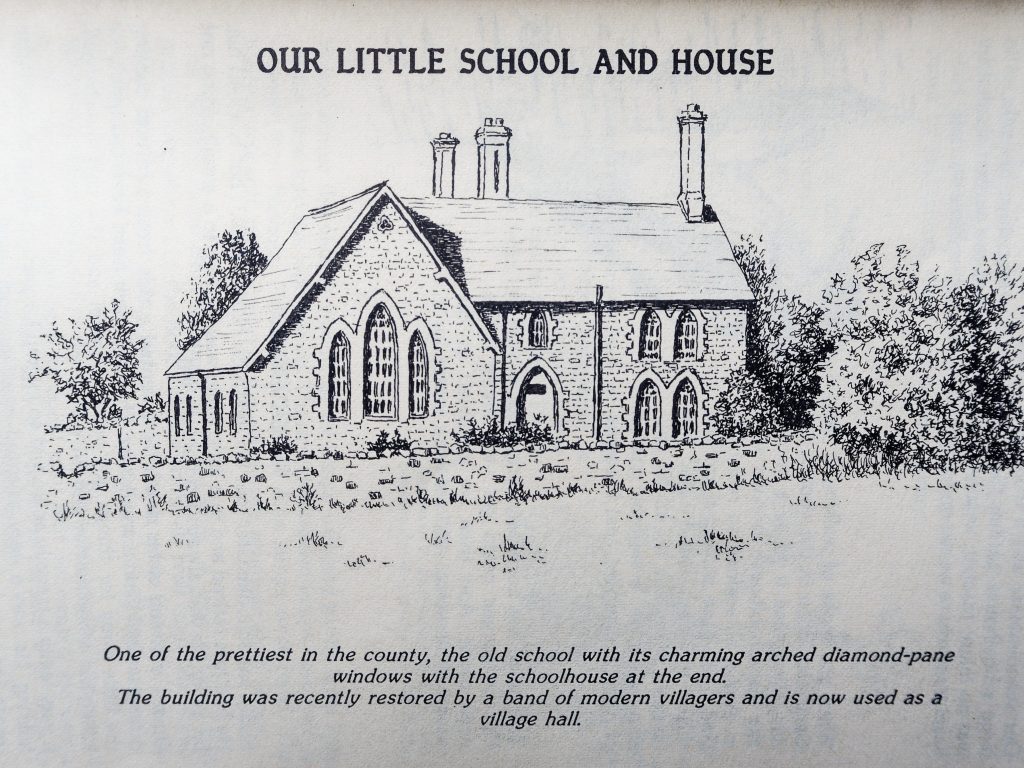
Today is our Harvest Festival. The old church looked lovely with the autumn flowers. Shafts of sunlight fell on the yellow flowers on the sills of the diamond-paned windows. Only the people were lacking. Years ago the Harvest Festival was a time of great excitement . Sheaves of corn were brought into the church and bunches of corn were everywhere. The pews were not enough to hold who came so chairs were borrowed from village homes and put down the aisle, even these were not enough. Sometimes the very doors had to be left open to make room for people inside and some had to stand at the back of the church. It was a real Harvest Festival and the old familiar hymns were sung with gusto. Will this ever come again? I doubt it.
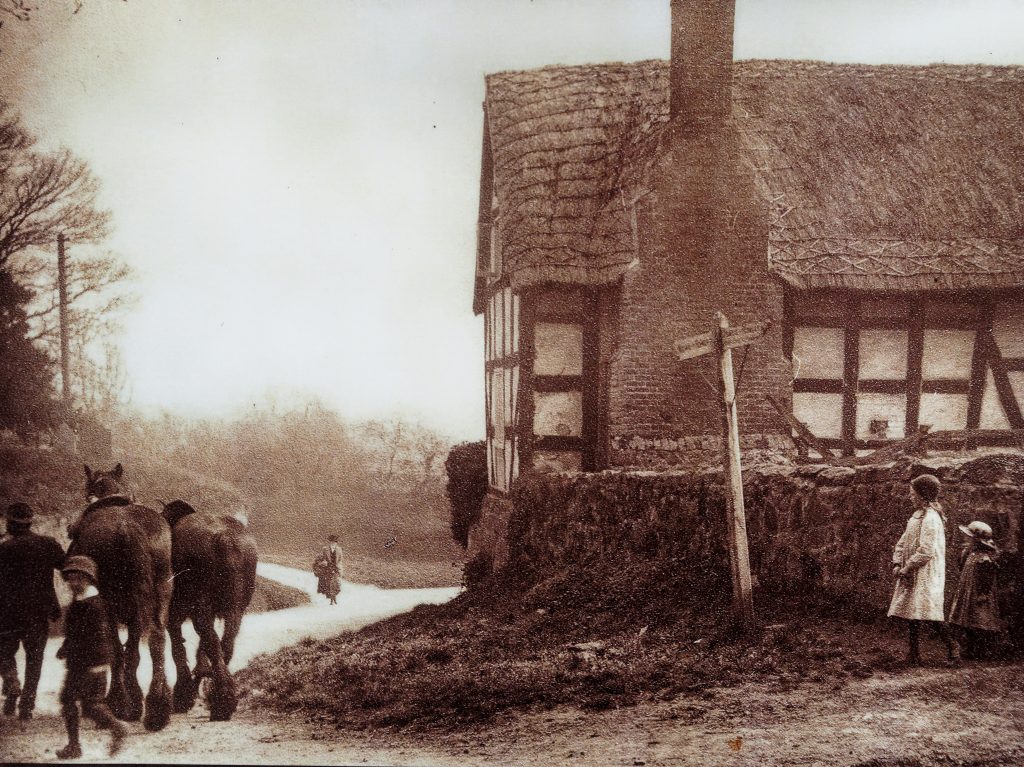
Harley in the early 1900’s
Hilda seems to mitigate the disturbing effects of these major changes by holding firmly onto a romantic dream past, particularly that of her childhood. This is quite understandable and it must have given her an increased sense of stability in a rapidly changing world. She strongly emphasizes the beauty of the all pervading natural environment and describes this in telling detail.
The days of youth seem so very far away. Memories of other days like this, many years ago come crowding back. Cycling home from school. getting ready for a dance, all is far away. Somehow then the evenings with their colours did not register. It is only when we have time to stand and stare that these things push themselves to the fore as if to say, ‘Look at us while you can and remember us’.
If we could experience her experiences from our modern perspective the effect would be transfixing and magical. Unfortunately we can’t but her words help.